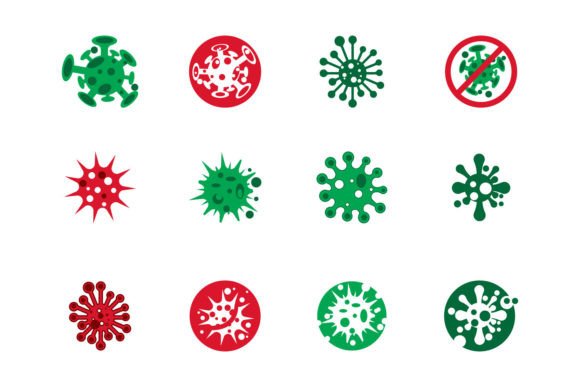
Virus Logos and Symbols: Communicating Health in Design
The visual language of health, disease, and medicine is everywhere. From public health campaigns to pharmaceutical branding, the symbols we use carry immense weight. At the center of this visual lexicon is the virus logo and symbol—a powerful graphic shorthand that can convey everything from dire warning to scientific innovation.
Decoding the Visual Language of Viruses
A virus logo or symbol is more than just an illustration of a microbe. It's a designed representation, often simplified or stylized, intended to communicate a specific idea related to virology, medicine, or public health. These designs frequently incorporate elements like spiky coronas (evoking coronavirus and COVID-19), helical structures, or abstract renditions of bacteria and pathogens. They exist not to accurately depict microbiology, but to instantly connect with the viewer on an emotional and intellectual level.
The utility of such symbols is vast. In a world saturated with information, a well-designed virus icon can cut through the noise. It serves as an immediate visual cue, signaling topics of infection, protection, vaccine research, or epidemic response. This is why they are indispensable tools for professionals, educators, and creators who need to discuss complex health topics clearly and efficiently.
Key Characteristics of Effective Virus Imagery
Not all virus graphics are created equal. Effective ones share certain notable qualities. They are typically isolated and clean, designed to stand out on a page or screen without background clutter. They balance scientific authenticity with graphic simplicity—a stylized, vector-based virus symbol is often more usable than a hyper-realistic 3D model. Furthermore, the best designs are adaptable; a single virus logo concept can be rendered in colors that suggest danger (reds, oranges) or science and hope (blues, greens), depending on the context.
Their strengths lie in their universality and speed of communication. A person encountering a virus symbol in an infographic about influenza prevention or on a hospital sign about antibacterial protocols understands the core subject instantly, regardless of language or literacy level. This makes them crucial for global public health messaging, as seen extensively during the pandemic.
Practical Applications Across Industries
The use of virus logos and symbols extends far beyond medical journals. Their application is a testament to their versatility in our visually-driven world.
In the professional and educational sphere, these symbols are foundational. Science educators use them in textbooks and digital learning modules to explain viral structures and the immune system. Corporate trainers in healthcare or manufacturing employ them in safety manuals to highlight infection control points. Researchers and universities incorporate stylized virus icons into their presentation templates and conference materials to visually anchor their work on microbiology or pathogen studies.
For creators, marketers, and entrepreneurs, the value is tied to communication and branding. A health tech startup developing a new fever monitoring app might use a clean, modern virus symbol in its logo to immediately communicate its field. A nonprofit running a mask distribution or vaccine awareness campaign relies on recognizable virus imagery in its social media graphics and flyers to elicit quick public understanding and engagement. Even bloggers and publishers covering topics from illness prevention to the science of COVID-19 use these symbols in featured images to make their content visually searchable and relatable.
In commercial and digital environments, virus symbols function as critical UI/UX elements. Health websites use them as intuitive icons to direct users to sections on disease information or safe practices. Medical software interfaces might employ a simple virus icon to label a data module related to viral load or sick patient records. This enhances user experience through immediate, intuitive visual navigation.
From Concept to Implementation: Real-World Examples
Consider a freelance designer creating an infographic for a local clinic about 2019-nCoV variants. Instead of lengthy text descriptions, they use a series of differentiated virus logos—each with slight variations in shape and color—to represent different strains, making the complex information accessible. A business owner in the cleaning industry might integrate a stylized bacterium and virus symbol into their company’s logo to instantly communicate their focus on protection and disinfection services.
Another observation is the evolution of these symbols over time. The virus logo and symbol used for general flu awareness often differs subtly from those developed specifically for the coronavirus and Wuhan-associated outbreak. The latter designs, often featuring distinctive spike proteins, became globally recognizable in a matter of months, demonstrating how design must adapt to current scientific and public understanding.
Benefits Beyond Simple Illustration
Implementing a well-chosen virus symbol brings tangible benefits. For branding, it establishes immediate sector authority and trust. A healthcare app using a professional virus icon feels more legitimate than one using generic graphics. For communication and engagement, these symbols dramatically increase information processing speed. Viewers grasp the topic before reading a single word, leading to higher retention and interaction with the material.
Efficiency and productivity gains are also significant. A team working on a public health template can save hours of design time by utilizing a pre-designed, scalable virus logo vector instead of creating custom artwork for each project. This allows them to focus their energy on content and strategy rather than basic illustration.
Selecting and Using Virus Logos Wisely
When selecting a virus logo or symbol for your project, practical considerations are key. First, assess the tone. Is the goal to warn (danger, warning) or to educate (science, medicine)? The color and style of the symbol should match. A menacing, red spiked virus might be perfect for a caution sign, but inappropriate for a children's educational book about the human immune system.
Second, ensure technical usability. Opt for vector-based designs (SVG, AI, EPS files) over raster images (JPG, PNG) when possible. Vector graphics are infinitely scalable without quality loss, crucial for applications ranging from tiny mobile icons to large printed banners. Third, consider cultural and contextual sensitivity. Since the pandemic, virus imagery carries heavy emotional weight. Using a virus logo symbol requires thoughtfulness—it should inform and serve, not sensationalize or cause unnecessary alarm.
Finally, integrate it naturally. The virus logo and symbol should be a cohesive part of your overall design language, not an isolated sticker. It should complement your typography, color palette, and other graphical elements to create a unified message about health, prevention, or medical innovation.
In essence, the virus logo and symbol is a bridge between complex science and public understanding. Its power lies in its simplicity and its directness. By choosing and applying these visual tools with care and purpose, professionals, creators, and communicators can enhance clarity, build trust, and effectively engage their audiences on some of the most critical topics of our time.