Obigas: The Multipurpose Keynote Template for Professional Presentations
Crafting a compelling presentation is a critical skill in today’s professional landscape. Whether you are pitching to investors, showcasing a new product to your team, or delivering an educational seminar, the quality of your slides directly impacts your message's reception. Many professionals find themselves spending disproportionate time on design and formatting rather than on content and strategy. This challenge is precisely where a well-structured presentation template becomes an invaluable asset. Among the available tools, the Obigas Keynote Template offers a specific blend of flexibility, aesthetic clarity, and user-friendly editing that addresses these common hurdles.
Understanding the Core Structure of Obigas
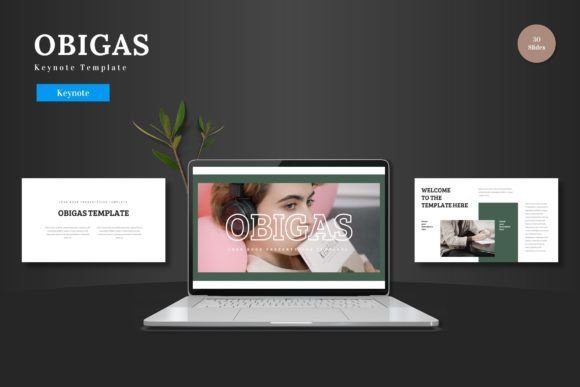
The foundational appeal of the Obigas template lies in its organized architecture. It is not a single, monolithic set of slides but a collection of five distinct color variations, each containing 30 slides. This results in a total offering of 150 slides, providing a substantial library of starting points for any presentation need. The template is built using master slides, a feature in Apple’s Keynote that ensures consistency. When you edit a master slide—adjusting a font, altering a color palette, or resizing a graphic element—those changes propagate throughout all slides derived from that master. This eliminates the tedious task of manually updating every individual slide, guaranteeing pixel-perfect consistency across your entire deck.
The package includes several key files, all centered around the Keynote application. Users receive the main Keynote file containing the 30-slide template across five color schemes. This approach means you select a color theme that aligns with your brand or topic—perhaps a vibrant set for a product launch or a more subdued palette for a corporate report—and have a complete, cohesive deck ready to populate. Additional resources like a readme file, font information, and photo usage notes accompany the main file, ensuring you have all necessary guidance without needing external research.
Editable Elements and User Control
A defining characteristic of the Obigas Keynote Template is its commitment to editability within the Keynote ecosystem. The product description emphasizes that "all elements on this template are editable from a Keynote Slides no need another software." This is a significant practical advantage. Users are not required to export graphics to Photoshop or Illustrator for adjustments. Every component, from the handcrafted infographics to the pixel-perfect illustrations, is resizable and editable directly within Keynote. Picture placeholders operate via a simple drag-and-drop mechanism; you insert your own photographs or charts directly into framed areas on the slide, and they automatically adapt to the placeholder’s dimensions and style.
This level of control extends to color. Changing the color scheme is not merely about applying a filter; the template is constructed with five premade variations. However, because colors are defined within Keynote’s style system, you can deviate from these premade schemes and customize hues to match your company’s exact branding. You can alter the color of a shape, a text background, or an icon without breaking the visual integrity of the slide. This balance between providing ready-made options and enabling deep customization is a hallmark of a professional template designed for real-world use.
Practical Applications Across Industries
The utility of a template like Obigas is measured by its range of applications. Its multipurpose design is suitable for business, pitch decks, e-commerce, and product promotion. Consider a startup founder preparing a venture capital pitch. They need slides that communicate market analysis, financial projections, team biographies, and product roadmaps. Obigas provides dedicated section break slides to segment these topics clearly, along with a gallery slide for showcasing product images and portfolio slides for highlighting past achievements or client testimonials. The clean design ensures complex data is presented without visual clutter, allowing the founder’s narrative to take center stage.
For an educator or researcher, the template offers a different set of advantages. Academic presentations often require the display of data-heavy charts, process diagrams, and comparative lists. The infographics based on master slides are resizable without loss of quality, meaning a complex flowchart can be expanded to fill a slide for detailed examination. The scalability of the graphics ensures that whether the presentation is delivered on a laptop screen or a large conference projector, all elements remain sharp and legible. Similarly, a marketing professional in an e-commerce business can utilize the animated slide included in the presentation to create a dynamic reveal of a new campaign or seasonal sales figures, adding a layer of engagement to their internal or external communications.
The Advantage of a Unified Workflow
One of the most subtle yet impactful benefits is workflow unification. The requirement to use multiple software packages—one for layout, another for vector graphics, a third for image editing—creates friction, increases the chance of version errors, and demands broader technical skill. Obigas consolidates the entire creation process within Keynote. Input your content directly into text boxes, replace images into placeholders, change colors, and animate transitions all from the same interface. This streamlined process not only saves time but also allows the presenter to maintain a singular focus on the narrative flow and argument of their presentation. The final output is a cohesive file ready to present to the world, without last-minute exports or format conversions.
This workflow is particularly advantageous for individuals who may not be dedicated designers but are responsible for creating high-stakes presentations. Business owners, team leads, consultants, and hobbyists creating content for public workshops can all achieve a professional-standard visual output without needing to master multiple complex design tools. The template acts as both a guide and a scaffold, providing a strong starting structure that the user then personalizes with their specific content and minor stylistic tweaks.
Key Features and Their Real-World Relevance
Examining the listed features beyond their technical description reveals their practical relevance. The "150 Total Slides" figure represents depth, not just quantity. It means for any given presentation theme, you have numerous slide layout options: title slides, content slides with text-image splits, full-image slides, comparison tables, quote slides, and conclusion slides. This variety prevents the repetitive look that can bore an audience, allowing you to choose the layout that best suits each piece of information.
The handcrafted infographics are a standout feature. In a professional context, using generic, overused clip-art can undermine credibility. Custom, clean infographics—for depicting hierarchies, timelines, or cyclical processes—communicate that care has been taken in the presentation’s preparation. Because they are based on master slides, you can edit the text labels, adjust the number of items in a list, or even change the connector lines without having to redraw the entire graphic. This adaptability makes them truly useful, not just decorative.
The inclusion of animated slides speaks to modern presentation standards. A static slide deck can sometimes feel flat, especially when explaining processes or building a narrative. A carefully designed animation, perhaps revealing key points sequentially or smoothly transitioning between related concepts, can guide the audience’s attention and enhance understanding. Having a professionally animated slide within the template provides a safe, effective starting point for users who may not have expertise in Keynote’s animation tools but wish to incorporate basic motion.
Considerations for Potential Users
While the Obigas Keynote Template offers broad utility, its effective use depends on a few considerations. First, it is designed exclusively for Apple’s Keynote software. This is ideal for users entrenched in the Apple ecosystem or who prefer Keynote over alternatives like PowerPoint or Google Slides. Its features leverage Keynote’s specific capabilities, such as master slides and seamless graphic editing. Users on other platforms would need to convert the file, which might compromise some editable elements.
Second, the template’s strength is its clean, scalable, and colorful design. This is excellent for presentations requiring visual appeal and clarity. For extremely niche or technical presentations that rely on highly specialized diagrams (like advanced engineering schematics or molecular models), the template provides the placeholder and structure, but the user would still need to supply those domain-specific visuals. Its multipurpose nature means it is optimized for general business, promotional, and educational content rather than hyper-specialized fields.
Finally, the concept of "editing just on Keynote Slides" is a major benefit, but it assumes a basic familiarity with the Keynote interface. New users should anticipate a short learning period to understand how to manipulate master elements, use picture placeholders, and modify color schemes. The provided readme file and documentation are intended to bridge this gap. Once mastered, however, this approach significantly accelerates future presentation development, as the skills apply to all projects built within the template framework.
In conclusion, tools like the Obigas Keynote Template exist to reduce the overhead of presentation design while elevating the quality of the output. By providing a clean, editable, and comprehensive set of slides within a single software environment, it empowers a wide audience—from business professionals to educators and creators—to focus on what matters most: crafting and delivering a powerful, persuasive message. The template’s design, with its attention to master slides, color variation, and resizable graphics, demonstrates an understanding of the real-world challenges faced by presenters. It transforms the task of slide creation from a design problem into a content curation problem, which is where the presenter’s true expertise should always lie.