Beyond the Point: The Enduring Power of Black Attack Arrows
In the vast landscape of visual communication, certain elements stand out not for their complexity, but for their stark, universal clarity. Among these, the Black Attack Arrow holds a unique place. More than just a simple graphic, it is a symbol loaded with intent, direction, and strategy. Often paired with pointer silhouettes in tactical diagrams, these icons form a foundational visual language used across retro maps, modern infographics, business presentations, and digital interfaces. This article explores the purpose, significance, and surprising relevance of these seemingly simple vector design elements in our daily lives.
A Primer on the Visual Language of Direction and Force
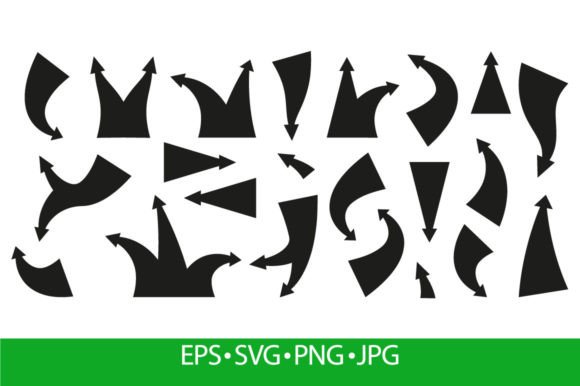
At its core, a Black Attack Arrow is a graphic symbol designed to indicate movement, assault, or a directed action. Its defining characteristics are its color—solid, unambiguous black—and its form, typically a sharp, pointed tip with a straight or slightly curved shaft. This simplicity is its strength. Unlike colorful or ornate arrows, the black variant conveys urgency, precision, and serious intent. It strips away any decorative distraction to focus purely on the message: "Here is the target. Here is the path of action."
When combined with pointer silhouettes—simple flat icons representing units, forces, or entities—the arrow becomes part of a tactical storytelling tool. Think of the classic war room map: silhouette icons for troops or tanks, with black arrows sweeping across the terrain to show planned assaults or enemy movements. This pairing creates an immediate, at-a-glance understanding of dynamics, relationships, and strategy, a principle that extends far beyond military contexts.
The Historical Roots and Modern Evolution
The use of arrows on maps and plans dates back centuries, but the stylized, vector-based Black Attack Arrow as we know it today gained prominence with mid-20th-century military cartography and board game design. Its retro aesthetic evokes a sense of clear-cut planning and decisive action. Today, this style has been digitized and isolated into comprehensive collections available in EPS, SVG, PNG, and JPEG formats. This means designers and creators can access scalable, crisp versions of these icons for any project, from a historical video game overlay to a cutting-edge business strategy slide.
The evolution from physical map markers to digital vector assets highlights a key point: these symbols have transitioned from specialized tools to universal visual commodities. Their formats ensure they are adaptable—SVG for scalable web use, PNG for quick digital inserts, EPS for high-end print design. This accessibility fuels their continued relevance.
Purpose and Significance: More Than Just a Graphic
The primary purpose of these arrow and silhouette sets is visual simplification and strategic communication. In an age of information overload, a well-placed black arrow can cut through noise. Its significance lies in several key areas:
- Clarity Over Decoration: It serves function first. The black color avoids any emotional or brand color associations, focusing purely on the directional data.
- Universal Understanding: The symbol is nearly globally recognized. An arrow pointing at something implies action toward that thing, making it invaluable for multi-language or broad-audience materials.
- Temporal and Spatial Planning: It shows proposed movements, future steps, or flows in processes, helping visualize sequences that words alone might complicate.
A common misunderstanding is that these elements are only for "attack" or aggressive contexts. While their name originates from tactical uses, their application is far broader. Any scenario requiring a clear depiction of force, influence, pressure, or directed change can benefit from their visual impact. Think of a financial chart showing market pressures, a flowchart illustrating a software's data "attack" on a problem, or an educational diagram showing the "force" of a historical migration.
Practical Relevance in Modern Life and Work
The utility of Black Attack Arrows and pointer silhouettes permeates numerous fields. Their flat, simple design makes them perfect for modern, minimalist interfaces and materials.
In Business and Strategy
In corporate environments, these icons are staples in presentation decks and whiteboard sessions. A silhouette of a competitor with black arrows pointing from your company's icons instantly visualizes market strategy. Arrows on organizational charts can illustrate proposed restructuring or the flow of authority. They transform abstract strategic concepts into concrete, discussable visuals, aligning teams and clarifying objectives.
In Education and Explanation
Teachers and educational content creators use these elements to break down complex events. A history lesson on a battle becomes clearer with simple unit silhouettes and arrows on a map. A science video explaining force vectors might use a black arrow icon to represent applied pressure. They act as cognitive shortcuts, helping students grasp spatial and dynamic relationships without needing advanced literacy or prior knowledge.
In Technology and User Interfaces
While UI design often uses more subtle cues, the principle of the directive arrow is alive in cursor icons, navigation prompts, and diagramming software. Many flowchart or network diagram tools include libraries of black arrows and node icons (the modern equivalent of silhouettes) to let users build process maps. The retro aesthetic of these arrows also finds a home in certain game UIs or apps seeking a vintage, tactical feel.
In Daily Creativity and Planning
Even in personal projects, these vector assets are useful. Planning a community event? Use a map with pointer silhouettes for key locations and arrows for pedestrian flow. Creating a personal goal chart? A black arrow pointing from "Current State" to "Goal State" powerfully visualizes your trajectory. They empower individuals to think and plan strategically using a professional visual toolkit.
Building a Broader Understanding: The Symbol as a Tool
To fully appreciate these design elements, one must see them not as mere decorations, but as tools for thought. They externalize and objectify direction and agency. By placing a black arrow on a canvas, you are committing to a narrative of action. This act forces clarity—you must decide where the arrow starts, where it points, and what it represents.
Furthermore, their isolated vector nature means they are building blocks. A designer or thinker can combine them, repeat them, and scale them to build larger, more complex narratives—a whole campaign visualized with multiple arrows and unit types, or a business process with dozens of steps. This modularity is key to their enduring value.
- Start with the Core Idea: What force or movement are you trying to show?
- Choose Your Entities: Use appropriate pointer silhouettes or simple icons to represent the actors (e.g., a team, a department, a competitor).
- Apply Direction: Use the Black Attack Arrow to illustrate the direction, intensity, and target of the action.
- Iterate and Combine: Use multiple arrows to show sequences, conflicts, or converging strategies.
By following this mental framework, anyone can leverage this visual language to enhance communication, whether in a formal report, a school project, or a personal plan.
Conclusion: The Unassuming Power of a Simple Line
The Black Attack Arrow and its companion pointer silhouettes prove that in design and communication, often the simplest tools are the most powerful. Their journey from retro battle maps to versatile digital asset collections demonstrates their adaptability and timeless need. They fulfill a fundamental human requirement: to see direction, strategy, and change laid out plainly before us. In a world dense with information and nuance, these stark, flat symbols offer a moment of visual certainty, a clear path drawn in black, pointing us toward understanding and decisive action. Whether you are a student, a manager, a designer, or simply someone trying to organize a thought, recognizing and utilizing this elemental visual language can bring clarity and impact to your endeavors.